thirukkural kathaigal
Description
Couplet-level retrieval over Thirukkural and its commentary tradition, generated into short visual narratives with Tamil narration.
Deliverables
Retrieval, generation and narration on a densely compressed source
Iyal AI is a Tamil language technology company. We build the language models, speech systems and retrieval tools that let Tamil work natively inside AI — and we test them against two thousand years of Tamil writing.
Built and
tested on Tamil
What is Iyal AI?
Iyal AI is a Tamil language technology company built around one problem:
Tamil has around eighty million speakers and one of the longest continuous written records of any living language — and almost none of it is available to the systems people now use to read, search, write and listen. Models trained overwhelmingly on English treat Tamil as the degraded case. We build the models, speech systems and retrieval tools that close that gap, and we build them so they can be handed to the people whose language it is.
80M+
Tamil speakers worldwide
2,000+
Years of continuous written Tamil


Tamil literature turned into structured corpora, evaluation sets and pipelines other products can build on.
From foundation models to the tools people actually use on a phone. Every track starts from Tamil rather than adapting to it.
Description
Couplet-level retrieval over Thirukkural and its commentary tradition, generated into short visual narratives with Tamil narration.
Deliverables
Retrieval, generation and narration on a densely compressed source
Description
Long-form Tamil literary text structured into segments a generation pipeline can work from, without abridging the source.
Deliverables
Segmentation and structuring across a long, inflected corpus
Description
Period-constrained generation across a Tamil epic, where scene continuity and historical detail are both verifiable against the text.
Deliverables
Continuity conditioning and constraint from a researched source
Description
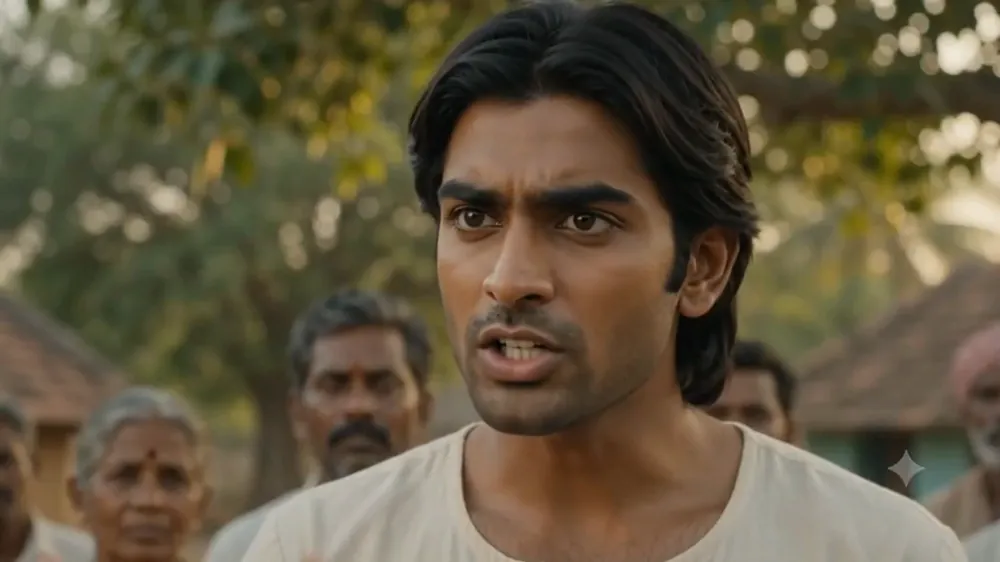
Generation grounded in the landscapes and registers described in Sangam literature rather than in the model's received visual defaults.
Deliverables
Grounding generation in a specified corpus, against model priors
Most systems reach Tamil by translation or adaptation. We design for the script, the morphology and the register from the start, so Tamil is not the case that degrades.
Tamil is low-resource in practice, not in principle. We invest in sourcing, cleaning and annotating Tamil text and speech before anything is trained on it.
Every model ships with a Tamil evaluation set and the results that produced it. Where it is weak, we say where — the benchmark is published alongside the work.
Language tools built with public support should stay in public hands. We build for clear licensing, documented provenance and transfer of ownership rather than lock-in.
Language models trained and fine-tuned for Tamil morphology, script and register — not English models asked politely to cope.
Assistants that hold a conversation in Tamil end to end, including the parts where the user switches register or code-mixes.
Tamil speech to text and text to speech built for real accents and real recording conditions, not read-aloud studio audio.
Machine translation, paraphrasing and grammar assistance that keep Tamil idiom intact instead of flattening it toward English.
Search, extraction and text mining over Tamil corpora, so a body of writing becomes something you can actually query.
Tamil language data handled under Indian data protection law, with consent, anonymisation and localisation designed in rather than retrofitted.
We work across open and commercial models, fine-tuning and evaluation frameworks, speech toolkits and generation pipelines — chosen per task and benchmarked on Tamil rather than assumed to transfer.



எட்டு தமிழ்க் கருவிகள். இப்போதே பயன்படுத்துங்கள்.
Press the mic and speak in Tamil. Your words appear as Tamil text while you talk, and each finalised segment is kept with a timestamp.
Tamil layer by Iyal AI: Tamil variety handling and the held-out Tamil evaluation set
திற · Open the full productTamil — India
Press “Start speaking” and speak Tamil into your microphone.
Your words will stream here in real time as native Tamil Unicode text.
Iyal AI builds the Tamil layer: the corpus, the tokenizer, the morphological analyser, the pronunciation scoring and the evaluation set. Commodity acoustic and translation engines are integrated underneath where buying beats building, and Tamil text analysis runs entirely in your browser.
தமிழுக்காக உருவாக்கப்பட்ட AI. எங்கள் சொந்த முயற்சி.
The Tamil corpus, the tokenizer and the evaluation set behind these products are ours and already measured. The next step is the model itself: a Tamil-first language model we train, evaluate and licence ourselves — two billion parameters, small enough to run on a phone.
Phases 00 and 01 have happened, and every number below them is measured rather than projected. Phases 02 onwards are planned work; timings assume funded compute.
The Tamil products above, across speech, language and learning. They also produce the held-out Tamil test material and the evaluation harness every later phase is measured against.
Collect, clean and deduplicate Tamil text with provenance recorded per source, then build a tokenizer so Tamil words stop fragmenting into meaningless pieces. A pilot run over 67,587 Tamil Wikipedia documents (16.3M words) is complete; the result below is from it.
Fertility measured over 300 held-out Tamil documents. Lower is better — fewer tokens means lower cost, longer context and faster replies.
Continue training a permissively licensed 2B base on the Tamil corpus, so Tamil stops being the degraded case. Measured from the pilot: roughly 250 GPU-hours for 30 billion tokens seen — about 31 hours on eight GPUs.
Teach the model to follow instructions and hold a conversation in Tamil across registers, from spoken everyday Tamil to formal written Tamil.
Measure on held-out Tamil benchmarks, publish the results including where the model is weak, and release with ownership and licensing stated up front.
எங்களுடையது எது? சரிபார்க்கும் வழி என்ன?
Five claims. Each is stated so it can be tested rather than taken on trust, and the first two are already measured and reproducible on request.
General tokenizers cut Tamil statistically, as a character sequence, which shatters inflected words into fragments that mean nothing. Ours is built with Tamil word formation in mind — roots and productive suffixes as units — so Tamil costs less to read, fits further into context and comes back faster.
Evidence: Measured: 1.81 tokens per word against 9.77 for Qwen2.5, over 300 held-out Tamil documents — 5.4× fewer tokens for the same Tamil. Re-runnable with a single command.
Without a public Tamil benchmark, every claim of Tamil AI capability is unfalsifiable. We built one — cloze items generated from held-out documents, plus hand-written grammar items on sandhi doubling, case endings, agreement, plurals and word order — and we publish our own scores on it, including where we do badly.
Evidence: 212 items built and scored. A strong general model reaches 72.6% on Tamil a school student would find easy; chance is 19.8%. That gap is the work.
Public Tamil speech systems are trained mostly on read, formal, urban speech, then deployed on a helpline where someone speaks quickly in a regional variety with English words mixed in. We work across the Indian, Sri Lankan, Malaysian and Singaporean varieties and intend to report accuracy per variety rather than as one flattering average.
Evidence: Four Tamil varieties are live in recognition and in eight neural voices today. Per-dialect error rates on spontaneous code-mixed speech are not yet measured; the evaluation harness for it is built.
The Tamil script was reformed in 1978. Much of the twentieth-century Tamil literary and periodical record uses the older orthography, which current recognition handles poorly — so a large archive sits unreadable by machine. There is no commercial champion for fixing it and clear public value in doing so.
Evidence: Scoped and designed, not yet built. Named here because it is a specific, checkable commitment rather than a general ambition.
Anonymisation tools built for English do not reliably catch Tamil personal names, Tamil place names or Indian identifier formats written in Tamil script. Reliable anonymisation is a precondition for sharing Tamil data lawfully at all, so this is not merely a compliance item — it is what unlocks the corpus scarcity the whole field is stuck behind.
Evidence: The corpus pipeline already records provenance and licence metadata for every document. Tamil personal-data detection and its benchmark are scoped and not yet built.
வரவிருக்கும் திட்டங்கள்
The Tamil language initiative for the current year. None of these eight is finished — this is what Iyal AI is building next, and what already exists underneath each one. The eight Tamil products already in production are a separate thing, and they are the foundation several of these stand on.
Four have a preview you can open and try. The other four have their foundation live already — the product they extend works today, but the work described here has not started. Counted against the list above rather than written once and left alone: கல்வெட்டு was carrying a research label after the evidence had already moved it, and வாசி a foundation label after it had shipped.
Tamil learning games, grades 1–12
The Academy's own exercise types as playable games — பொருத்துக, கோடிட்ட இடத்தை நிரப்புக, and மெய் எழுத்தைக் கண்டுபிடி — with audio, instant checking and no scores shown to the child.
Runs on கற்று's existing engine: the letter grid, grapheme-aware scoring and audio playback already work. What this needs is exercise content, not new technology.
திற · Open விளையாட்டுAI teacher for school textbooks
A Tamil tutor that works through a lesson with a student, asks rather than tells, and answers in Tamil at the reading level of the grade it is teaching.
கேள்வி is the engine and already answers in Tamil with a tutor mode. The missing half is the curriculum and progress tracking, not the conversation.
திற · Open ஆசிரியர்Tamil ↔ world languages
French, German and Portuguese into and out of Tamil, directly — not routed through English, which is where the meaning usually goes.
மொழி already translates bidirectionally and the interface takes any language pair. Each new pair ships only once its quality is measured on a held-out set.
திற · Open மொழி — the base it builds onGrammar, sandhi and paraphrase
Corrects Tamil writing and explains the rule behind every correction, so the writer can defend their own sentence afterwards.
Live. Explains வல்லின மிகுதல் and வேற்றுமை உருபு rather than silently rewriting; the three registers are being completed.
திற · Open எழுத்து — the base it builds onPalm-leaf manuscripts to readable Tamil
Reading palm-leaf manuscripts into text a person can search, quote and study.
Reassessed 30 Oct 2026 and upgraded. Modern handwritten text recognition reads a whole line at once and never cuts it into letters, so the segmentation problem that stalls the old pipeline does not arise. And the Central Institute of Classical Tamil publishes a complete Tirukkural ground-truth corpus — 1,330 of 1,330 kurals — exported for exactly the Kraken and TrOCR toolchains that need it. Engineering with a starting point, not research waiting on data.
திற · Open the pipelineStone inscriptions, searchable
Morphology-aware Tamil search across the inscriptions that have already been transcribed and published — which no one can search properly today.
Reassessed 30 Oct 2026 and downgraded. The ~6,000 published inscriptions are transcribed in print, not in machine-readable text: every digital source checked — the whatisindia HTML edition and the Internet Archive OCR of two SII volumes — contains zero Tamil characters. Unlike ஓலைச் சுவடி there is no published corpus to build on, so the first step is asking ASI whether keyed text exists.
திற · Open தேடல் — the engine it will useTamil for people who cannot see
A Tamil reader who loses their sight depends entirely on how well a screen reader speaks Tamil — and NVDA speaks it through eSpeak, a voice first attempted in 2007 that still mispronounces consonants.
Tamil is readable today, just badly — so this is about quality of access, not access. வாசி is the first working piece: open a Tamil .txt or .docx and hear it in one of the eight neural voices, paragraph by paragraph, operated entirely from the keyboard and announced through aria-live. The file is read in the browser and never uploaded. Still open: a real NVDA and TalkBack pass against the GIGW bar that government services are held to, which is why this is a preview and not an accessibility claim.
திற · Open வாசி — hear a document readGovernment orders: search and drafting
Find the order that governs a case, and draft the reply in correct official Tamil from a one-line brief.
Reassessed 30 Oct 2026. Two real orders were downloaded from the official portal and checked: both are pure scans — 1654×2338 JPEG per page, zero characters of text layer — so this needs OCR after all, though printed English is the easy kind. The portal is fully enumerable and every order carries a rigid skeleton plus a Read:- list citing the orders it depends on, which makes a citation graph. Worth knowing: School Education 2025 publishes 21 orders in English and 0 in Tamil.
திற · Open தேடல் — the engine it will useTamil language technology: models, speech systems, translation and writing tools, and retrieval over Tamil corpora. The applied work — literature rendered as visual narrative — runs on the same pipeline and is where the generation and evaluation stack gets tested.
Corpora are sourced with provenance recorded per set, and personal data is handled under Indian data protection law with consent, anonymisation and localisation designed in. We do not train on material we cannot account for.
That is settled in writing before work starts. We build for clear licensing and documented ownership, including arrangements where the resulting product and its IPR sit with the funding institution rather than with us.
Institutions and companies that need Tamil to work properly — government and academic bodies, publishers and archives, and product teams whose Tamil users are currently served by a translated interface and an English model.